Imagine something invisible and potentially harmful, lurking quietly behind the walls of your home—something you can’t see, but that’s always there. It can affect your health in subtle ways, often without you realizing it. If you know what to look for, you might be able to protect yourself. But if you don’t, you may unknowingly be putting your well-being at risk. If you don’t know how damaging it is, then your health and safety are at risk. What am I talking about? Electricity.

We don’t think much about electricity, except when the lights go out during a bad storm, or a switch suddenly stops working. The lack of electricity causes us much distress! Electricity powers nearly everything in our lives, yet we often forget that its constant presence isn’t always benign.
Electricity has always existed in nature—think lightning bolts and solar flares—but it has only been since the late 1880s that humans have harnessed it. The electricity that is currently coursing through the wall behind you is not harmless. It has measurable effects on health. We don’t think about it because it is invisible—yet research shows it can influence nearly every bodily function studied so far.
The entire electromagnetic spectrum includes not only the electricity that powers our homes, but also a dozen other forms of radiation. As humans we can only directly perceive a small portion of the electronmagnetic spectrum – visible light and infarared heat.” Everything else must be detected with instruments. That is why many people today remain unaware of just how drastically—and rapidly—we’ve altered our natural environment in the past 140 years.
Electricity, along with the many forms of electromagnetic radiation humans have created—is now saturating our world. For billions of years life on Earth evolved under simple natural energy sources: sunlight, moon cycles, lightning strikes, weak radio waves from outer space, and low-level electromagnetic fields. As Dr. Robert Becker, author of The Body Electric, wrote, “Large parts of the energy spectrum were totally silent [in those years]”—and he noted that “we’ll never experience that quiet world again.” Today, there are very few places left on the planet untouched by electricity, man-made radiation, or satellite signals.
To me, that’s a deeply unsettling thought.
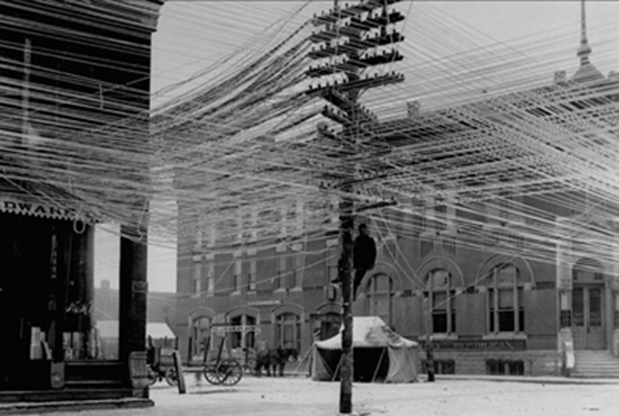
Electrification timeline in the U.S.
The health effects of electricity have been observed since at least 1886, when Westinghouse installed alternating current (AC) lines in Great Barrington, Massachusetts. Before that, Thomas Edison’s company had introduced direct current (DC) lines in New York City. Urban areas saw rapid electrification by the early 1930s, while rural and agricultural regions lagged behind—only reaching similar levels of electrification around 1956. By the mid-20th century, electricity use was widespread, and so were its potential health impacts.
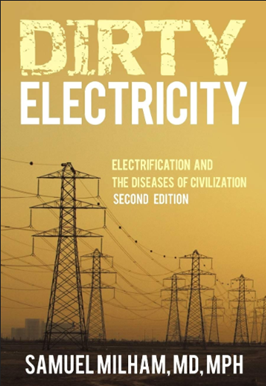
An epidemiologist by the name of Dr. Samual Milham brought attention to the health effects when he discovered a strong statistical correlation between introduction of electricity in a city or state and the onset of chronic diseases—particularly cancer and heart disease. Rural farms and towns, which were among the last to acquire electrical service (some not until the 1950s as mentioned above), remained the healthiest for the longest.
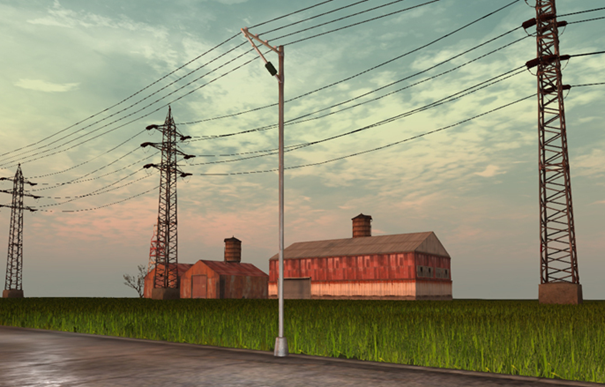
While correlation does not equal causation, Dr Milham compiled compelling data to support his conclusions—down to specific buildings that he studied. The La Quinta Middle School study reports an attributable cancer risk of approximately 64%, and even a single year working at the school corresponded to a 21% increase in cancer risk. This school had extremely high levels of “dirty electricity” (high frequency voltage transients) coming from every outlet in the rooms that were studied. It was suspected that this school was being affected by a defective utility substation about 1 mile away.
To be clear, the effects of electricity on people is not due to touching a live wire and getting shocked—that might kill you—it is about spending time near wiring in walls and from wired lights, appliances, circuit breakers, extension cords, motors and power lines in and around your home or office.
Dr Milham found a notable increase in leukemia mortality among children aged 2–4 that first appeared in urban areas in the 1920s to 1950s, followed by rural areas after they adopted electricity. States with over 75% electrified residences showed a 24% rise in leukemia deaths among toddlers compared to less electrified states. Milham argues that it’s not just electrification, but poor power quality (i.e. dirty electricity) that exacerbates biological stress — especially in electrically sensitive individuals.
Of course, electricity wasn’t the only environmental hazard emerging in the early 1900s. Other major factors included the widespread use of pesticides like DDT, as well as significant shifts in the human diet. However, for the purpose of this article, I’m focusing specifically on electricity.
Electromagnetic fields
Electromagnetic fields are all around us. To clarify, “electromagnetic” simply means a combination of electricity and magnetism. The electric fields that radiate from the wiring in your walls can be measured with a meter. These are alternating current (AC) fields, meaning they switch polarity 60 times per second—the standard in U.S. homes and buildings. However, this constant fluctuation can be stressful for biological systems like the human body. Because AC is always changing, our bodies struggle to adapt. In contrast, a steady direct current (DC) field is easier for the body to tolerate.
Your body may be carrying a small electric charge when you sit, sleep, or move around your home or workplace. But our bodies aren’t meant to be “charged”—we’re designed to stay neutral, with little to no electrical buildup, just as mother nature intended. Even without touching any wires, you can still accumulate charge simply from being near sources of electricity.
How Does Electricity impact Health?
The Russians have conducted some of the most extensive research on how electricity affects humans and animals. Yuri A. Kholodov, a Soviet neurophysiologist and pioneer in electromagnetic biology, carried out detailed laboratory experiments during the 1960s and 1970s, exploring how electromagnetic and magnetic fields influence brain activity and behavior in rabbits. Other Eastern European researchers also found that exposure to 50 Hz electric fields triggered the release of stress hormones in mammals. Unfortunately, much of this important research has been overlooked or dismissed by Western scientists—perhaps to our detriment (Dr. Robert Becker, The Body Electric).
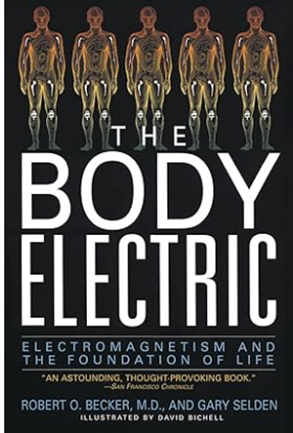
According to Dr. Robert Becker in The Body Electric, the primary effect of electricity on the body appears to be the activation of the stress response. The body reacts in at least two ways: changes in the composition of the blood—particularly in white and red blood cells—and stimulation of the immune system. However, with prolonged or intense exposure, the immune system can become exhausted, often indicated by elevated levels of cortisone in the blood. This weakened state may allow cancers and other diseases to emerge.
Another health impact involves the balance of calcium and magnesium in human cells. Dr. Martin Pall discovered that electric fields can open cellular channels, allowing a large influx of calcium into the cells [more here]. This excess energy triggers muscle micro-contractions, which may deplete the body’s mineral stores, increase cortisol levels, lower melatonin, and lead to restlessness and sleep disruption.
Calcium Fires muscles, Magnesium Relaxes Muscles
Think about it this way—constant exposure to alternating electric current causes muscles to contract (due to the influx of calcium into cells) depleting your magnesium level, which is trying to relax the muscle. Cortisol goes up. Sleep is disturbed.
EMF remediation experts have found that the average body voltage while lying in bed ranges from 500 to 3,000 millivolts (or 0.5 to 3.0 volts) and higher. In effect, electric fields may be robbing you of a good night’s sleep (Mercola, “EMF’d” 2020).
Blue Zones and Amish communities
The Blue Zones are regions of the world known for people living well into their 100s with little chronic disease. There are 5 of these regions. The Amish communities in the United States also live healthy long lives with little chronic disease. What do the Blue Zones and the Amish communities have to do with electricity?

The Amish communities typically reject electrification. Most of the Amish live their lives in communities with no electric power from the grid, however they may use battery power and generators to run farm equipment. The Amish have very low rates of chronic disease (ref and ref).
Three of the five Blue Zones (Nicoya, Ikaria, and Sardinia) also have had no or very limited electricity especially during the formative years of the now-elderly population. This lack of electrification likely helped reinforce:
- Natural sleep cycles
- Physical movement throughout the day
- Home-cooked meals
- Lower exposure to EMFs or “dirty electricity”
- Chronic disease rates remained relatively low
In Nicoya, Costa Rica, many centenarians grew up without modern conveniences (such as those powered by electricity) and lived traditional lives of farming, walking, and going to bed shortly after sunset. In Ikaria, Greece, older generations lived with minimal modern technology, cooked with wood stoves, and followed a natural light–based sleep/wake cycle. In Sardinia, Italy, many elders who reached 100 grew up without modern lighting, refrigeration, or appliances.
So, we have to ask: was it only diet that made these Blue Zone populations so healthy, as many people assume? Or were other environmental factors—such as the absence of electricity—also at play? Unlike us, they did not live in a constant soup of electromagnetic radiation.
What can you do?
If you want to reduce your exposure to electricity, and ground your body, you could pitch a tent in the back yard—but that’s a bit extreme (my yard has too many fire ants for that). While remediating electrical exposure is a complex topic that I won’t get into here, there are a few simple things I have done that I’d like to share with you.
Bedroom
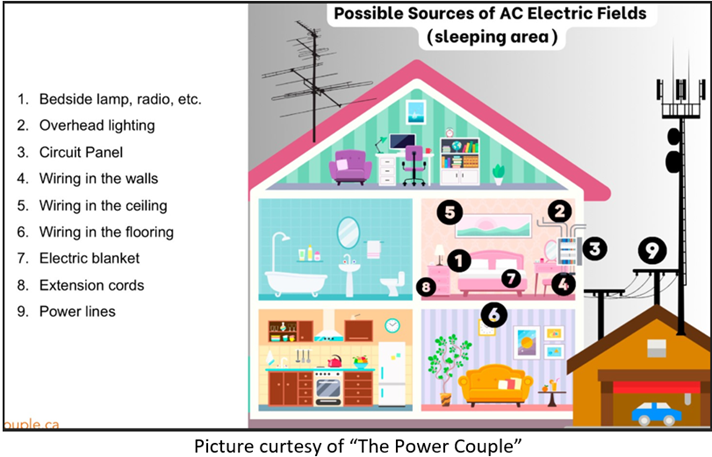
Since your bedroom is where you spend the most time in one place—especially during sleep, when your body restores and repairs—it should be the first area you address when reducing electric field exposure. A calming, low-EMF bedroom starts with two essentials: flicker-free lighting and minimal electric fields coming from the walls and wired devices. (For more on lighting, see my blog post dedicated to that topic.) Swapping out lightbulbs for flicker-free options is a simple first step.
But what about electric fields coming from the walls?
Curious about this myself—and embracing my inner geek—I built a basic voltmeter (link to Body Volt meter Roman Shapoval) setup to measure how much voltage my body was picking up while lying in bed. To my surprise, I measured between 800–900 millivolts (just under 1 volt). This exposure likely came from voltage in the walls and a nearby lamp cord. (Other family members have recorded even higher readings—up to 4 volts in their bedrooms!)
What did I do?
There are high-end options like painting your walls with EMF-shielding paint or installing a bed canopy that functions as a Faraday cage—but these can be expensive. A simple and cost-effective strategy is to turn off the circuit breaker to your bedroom each night. This eliminates voltage from the wiring in the walls while you sleep. (Important note: just turning off lamps or unplugging your alarm clock is not enough—the wires in your walls remain energized unless the breaker is off.)
When I turned off the breaker to my bedroom, my body voltage went to zero. This was good. However, my husband was not a fan of losing the electricity to the room. This was too extreme for him!
Fortunately, I discovered grounding (also called earthing). This simply means making direct contact with the earth—like walking barefoot on grass or soil. But don’t worry, you don’t have to sleep out on the grass. Grounding mats can bring your body voltage close to zero without needing to step outside. I purchased several of these mats at a reasonable price, and when I lie on one in bed, my body voltage drops to zero. No need to turn off breakers or repaint walls. I’ll share more about this in another blog specifically about grounding.
My Kitchen Island
My “geek streak” didn’t stop with the bedroom. I bought a TriField meter to measure electric fields around my home. This device detects the voltage radiating from walls, outlets, and wiring—and ideally, those levels should stay below 50 V/m or better yet, below 5 V/m (Mercola).
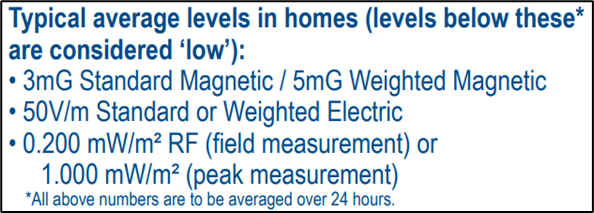
To my surprise, one of the highest readings came from a place I stand every day: my kitchen island! I enjoy cooking and preparing meals and simply leaning against the counter meant a hefty dose of electrical exposure I didn’t want. (Readings were 90 to 200 V/m) around the edge of the countertop.
In the photo below, you’ll see an outlet at the end of the island. The power line feeding that outlet runs under the entire countertop—right where I stand to chop vegetables. That means my midsection (stomach, pancreas…) was just inches away from 120 volts of electric field exposure. Not ideal.
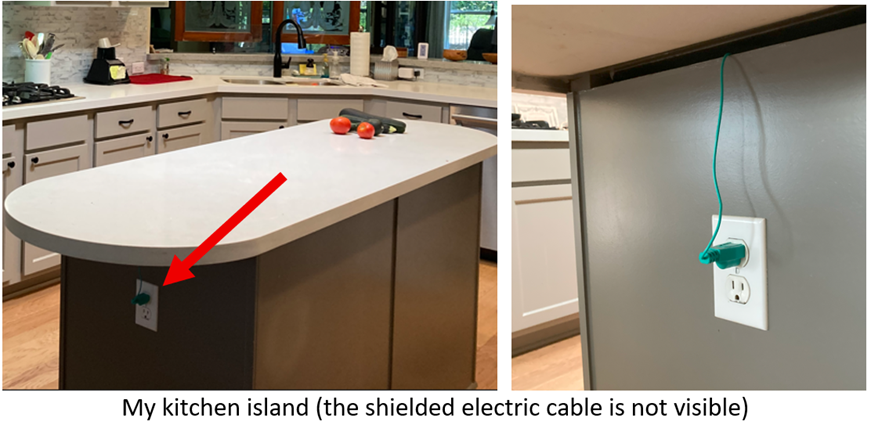
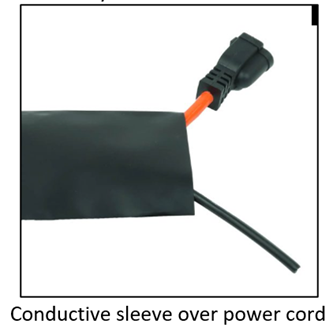
To fix the problem, I hired an electrician. We slipped a conductive shielding sleeve over the power line, and grounded it with an alligator clip and grounded plug (see the green plug in the photo above). The readings dropped dramatically.
Readings before island remediation were 90-200 V/m (too high).
Readings after island remediation were less than 10 V/m GREAT!
Summary
There are hidden health risks from everyday electricity and electromagnetic fields (EMF) which emphasizes how our modern electrified environment may subtly undermine well-being. Pioneers like Dr. Robert Becker, Dr. Samuel Milham, and Dr. Martin Pall, outline how electric fields can trigger stress responses, disrupt calcium balance in cells, and interfere with sleep.
After comparing historical and cultural communities—such as the electricity-free lifestyles of Amish communities and centenarians in Blue Zones—the potential benefits of reduced EMF exposure become clear.
I’ve shared personal experiments in lowering electric field exposure at my home, from using grounding mats to shielding kitchen wiring, showing that simple, practical changes can significantly reduce the body’s electric load—especially in critical areas like the bedroom.
If you are interested in learning more about the symptoms that some folks are experiencing from exposure to EMF’s, go here- The health hazards of EMFs.
Always talk to your health professional before starting anything new. This information is not intended to diagnose, treat or cure any condition and is intended only for entertainment. I welcome your comments.
Thank you, Jackie, for making me aware.
Fascinating article… About ten years ago, I bought an EMF meter and shielding devices that one plugs into the wall, but I could probably do more. I wish we could go back to a simpler time, (maybe not to kerosene lamps, and horse and buggies, but at the very least) focusing on eliminating an excess of the necessary. Thanks for all the interesting info!
Maybe instead of going back in time, we could all move out to the country, and live OUTSIDE of our houses more than INSIDE of our houses. Sitting out on the front porch or working in the garden. Wouldn’t that be nice!
Indeed it would be nice! I often remember the paradisiacal days of my youth at the old house, when there were so many, insects, birds and floral aromas filling the air. I spent most of my time outside, in the fields and woods. I used to name my favorite trees and spent hours aloft in their boughs.