In my last blog post, I shared why I choose not to wear sunscreen. As you may have read, the UV rays in sunlight activate beneficial biochemical pathways that help your body produce key hormones essential for better health.
In that post, I challenged conventional views on sun exposure, and argued that moderate, intentional time in the sun is essential for health and well-being. I explained why I avoid sunscreen and instead embrace natural sunlight, citing its benefits such as improved circadian rhythms, red blood cell function, gut and brain health, and even its antibacterial properties.
My blog post criticized excessive sun avoidance and overreliance on sunscreen, warning that many sunscreens contain questionable chemicals. I disputed the idea that sun exposure necessarily increases melanoma risk, noting that consistent, moderate exposure may actually reduce the risk of many serious diseases. Instead of fearing the sun, I advocated building gradual tolerance, listening to your body, and respecting the sun as a natural and necessary part of human biology.
But there’s more!
One topic that I did not discuss (as the post was getting too long) is how diet impacts the effects of sun exposure. Did you know that too many vegetable oils (polyunsaturated fats) in your diet can make your skin sensitive to sunlight?
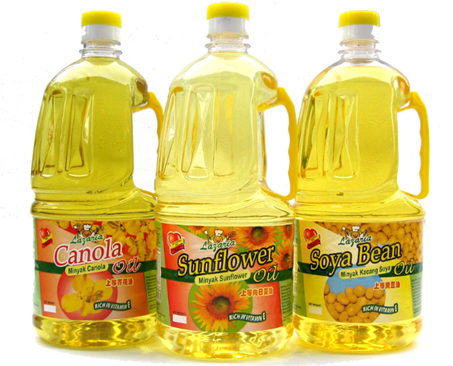
What do Vegetable Oils have to do with sun exposure??
What do Vegetable Oils have to do with sun exposure?? These fats disrupt the cellular structure in your skin and cause inflammation.
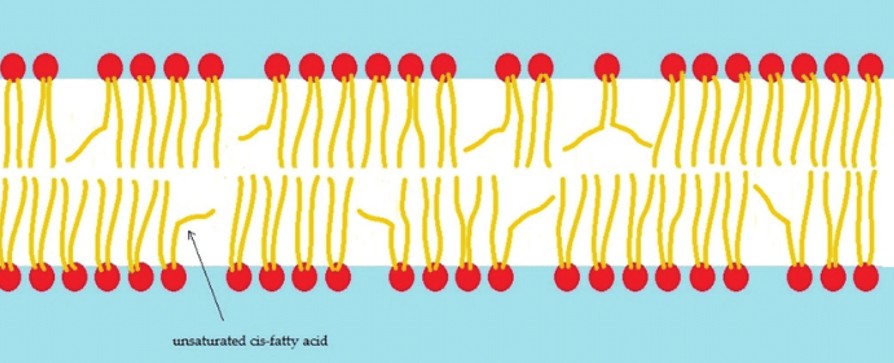
When you consume a lot of vegetable oils (seed oils) the fats in the oil build cell walls that look, well, crazy. See the picture below. The kinks are inherent in the molecular structure of the polyunsaturated fats-
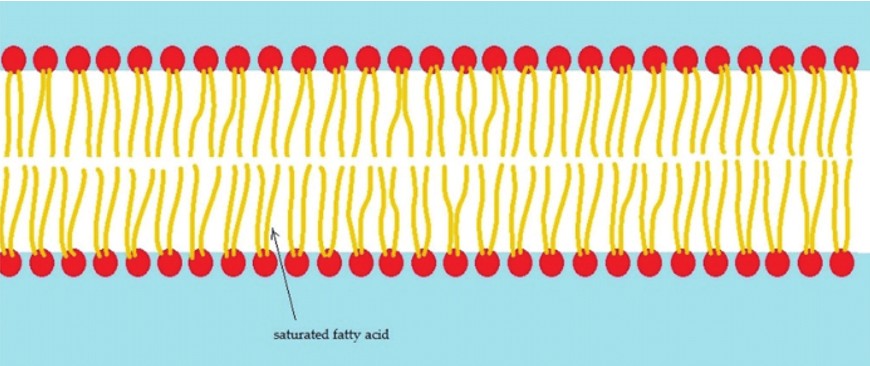
When you consume healthy saturated fats from animal foods, your body is able to build nice cell walls as shown in the diagram below—as saturated fats have a straight configuration.
Dr Joseph Mercola suggests eliminating seed oils (vegetable oils) from your diet about 6 months before starting serious sun expose. He postulates that vegetable oils trigger DNA damage in the skin.
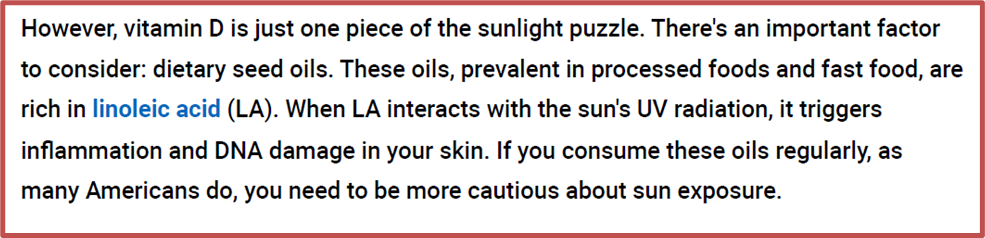
This means that sunburns start in the kitchen!
Ashley Armstrong from Angel Acres Farm puts it another way. Below is her article that I have reproduced here in its entirety:
Did you know that sunburns start in the kitchen? We’ve been told to fear the sun: hide from it, cover up, and slather on sunscreen. But the truth is: the sun is incredibly good for us. It’s energizing, healing, and essential to life.
That said… we don’t want to get burned. 🔥
And here’s something not many people realize: how your skin responds to the sun is shaped by what you eat, especially your fat choices.
Your skin is composed of layers rich in lipids (fats), and the types of fat you eat can shape the fatty acid composition of your skin. (ref)
If your skin is loaded with polyunsaturated fats (PUFAs) like linoleic acid (an omega-6 PUFA), it becomes more reactive under the sun. Why? PUFAs are unstable. When UV rays hit your skin, they create reactive oxygen species (ROS), molecules that can attack the double bonds in PUFAs, triggering lipid peroxidation.This damaging process breaks down your skin barrier, increases inflammation, and makes your skin even more sensitive to UV exposure, increasing your risk of sunburns and skin damage.
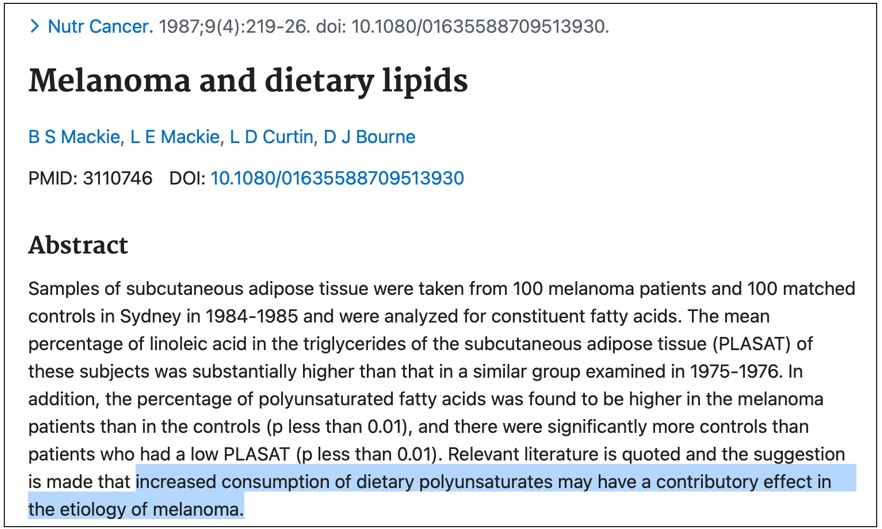
The Science Speaks for Itself
Individuals with higher levels of linoleic acid—an omega-6 polyunsaturated fat obtained through the diet—tend to have increased rates of melanoma, a type of skin cancer. (ref)
There is a strong association between Linoleic Acid intake and an increased risk of developing different types of skin cancer: squamous cell carcinoma, basal cell carcinoma, and melanoma. (ref) Removing seed oils (high in Linoleic Acid) dramatically reduces UV-induced sunburn risk. (ref). The more Linoleic Acid in the diet, the more UV damage the skin experiences. (ref, ref)
What This Means in the Kitchen
To build skin that is more resistant to burning and minimize your PUFA consumption:
Use butter, ghee, tallow, or coconut oil for cooking
Prioritize ruminant fats (beef, lamb, dairy)
Choose pasture-raised, meat that is corn- & soy-free
Avoid seed oils: canola, soybean, corn, safflower, etc.
Limit fatty cuts of conventional pork and chicken (which will contain more Linoleic Acid)
Keep nuts/seeds in moderation (they are high in PUFAs)
Since most processed foods contain vegetable oils—typically listed as corn, canola, or soybean oil on the label—you’ll need to avoid items like crackers, frozen meals, snacks, pizzas, baking mixes, and many others. Instead, focus on clean, simple foods that you prepare yourself. These are better for your health anyway.

Processed foods promote inflammation in the body because vegetable oils are highly prone to oxidation. In contrast, animal fats are more stable—and since humans have been consuming them for thousands of years, our bodies are well adapted to digest and utilize them efficiently.
Humans have also lived outdoors in the sun, for thousands of years. Consider upgrading your diet, reducing vegetable oils, and enjoying more sun exposure.
Always talk to your health professional before starting anything new. This information is not intended to diagnose, treat or cure any condition and is intended only for entertainment. I welcome your comments.
So interesting, Jackie! I never would have guessed the underlying relationship between the skin, the sun, and food choices.
I believe he did change the quality of the food, and now has healthier pigs.
Seems our bodies were not built to run on plant seed oils. In one article I read, a pig farmer found his pigs’ adipose tissue was softer and had less integrity when fed a steady diet of feed containing large amounts of linoleic acid. And then there is the connection you highlighted in your article; which is that overconsumption of seed oils causes the skin to burn more rapidly when exposed to the sun. I am glad that more people are waking up about the importance of diet in maintaining health and well being. Perhaps one day soon we can give Big Pharma a run for their money. Thanks for your informative articles on this and many other health related topics.
Very interesting about the pig farmer noticing the quality of the pig fat. Very intuitive. Let’s hope he was able to change the source of the pig food!