The following was adapted from a presentation I gave at my nutrition club. The information comes from the book Wheat Belly by Dr. William Davis—a book I had long overlooked since I have celiac disease and avoid wheat. When I finally read it, I learned a great deal not only about wheat but about other grains as well. (This article is a 15-20 minute read.)
Not Your Grandma’s Muffins!
10,000 years ago, humans started eating grains. Up until that point humans were hunter gatherers eating other plants as well as hunting animals. When humans started eating grains-
- Anthropologists see the start of cavities, bone deformities, and iron deficiency anemia. Wheat eating populations suffered from bone loss, low mineral levels and osteoporosis (as they do today).

Imagine being so hungry that you were forced to wonder into a field and pick the tiny seeds off the top of grasses! Wheat is a grass seed. Talk about being famished!

Einkorn is the great grandaddy of modern wheat. Genetically, it had only 14 chromosomes. Einkorn was first eaten in Europe around 3300 BC. After much cross-breeding with other wild grasses, and hybridization, it has become modern wheat and now has 42 chromosomes.
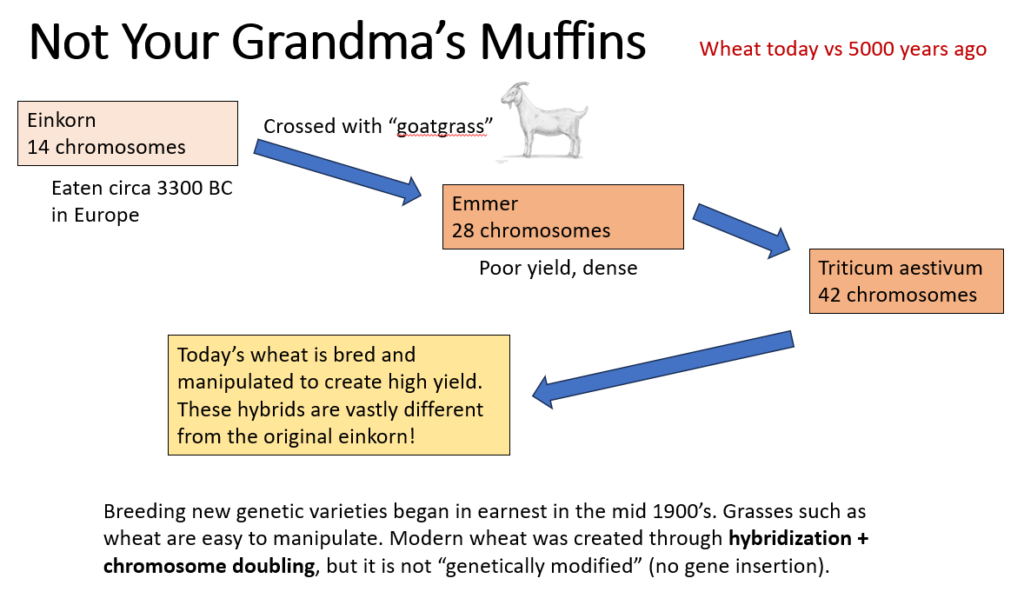
Clearly, it is not the same “animal” that it started out as! It now contains a more complex set of proteins, glutens and enzymes from the original einkorn grain. These recent changes in its structure raise important questions about how well it agrees with the human gut. We will explore these issues below.
Here is an analogy: If you were to mate a Great Dane and a Chihuahua (difficult but not impossible) (ha!)—you would still end up with a dog. Wheat, however, followed a different path. Repeated hybridization and selection produced a grain that is markedly different from the parent grain (einkorn).

Large scale agriculture may be to blame for some of this. Einkorn and ancient grains were very tall and difficult to harvest by modern combines. The wheat stalks fell over (called lodging) and could not be picked up by combines. “Semi-dwarf” wheat varieties were developed that were sturdier and had uniform growth. That is what is grown today. However, not much attention was paid to how these hybrids affected the human body.
Is it possible that these hybrid grains are the cause of a rise in celiac disease that started in late 1900s due to an increase in gluten content? Maybe. But wheat causes more trouble than just celiac disease. Let’s look closely at wheat-
Is it Really a Healthy Whole Grain?
We are told over and over again that wheat is a “healthy whole grain”. We see these words on cereal boxes, billboards, and ingredient labels. By the end of this article, I think you’ll see it very differently. Hold on tight—the ride is about to get wild!
Wheat Germ Agglutinin (WGA)
Modern wheat is bred to have more wheat germ agglutinin (WGA). This is a large molecule (lectin) that helps the wheat ward off pests. (Wheat has its own pest control!) Ancient wheat had only one form of this. Modern wheat has three forms of WGA (I’m oversimplifying the biochemistry here).
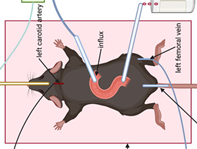
Why does this matter? Because wheat germ agglutinin is a bowel irritant. It may be inflammatory to humans. In laboratory settings, it has caused extensive damage to animal intestines. WGA also blocks intestinal hormones that are supposed to release bile and pancreas enzymes in animal models. If you eat wheat, you are eating this molecule. Knowing this, you might ask yourself – is wheat a “healthy whole grain”?
Amylopectin A
Amylopectin A is a starch found in wheat. It has all the same bad effects on the body as does regular sugar—it raises blood glucose, rots the teeth, raises triglycerides, and raises LDL cholesterol (the bad cholesterol). It is also found in rice, corn, barley, oats, rye etc. It is one of the reasons why people (and animals) gain weight on grains. It may be why those ancient humans valued it—it allowed them to gain weight to survive famines.

Have you heard of the Glycemic Index? Developed by researchers at the University of Toronto in 1981, it ranks foods based on how quickly they raise blood sugar levels, with glucose assigned a value of 100. Foods like meat and eggs, which contain little to no carbohydrate, have minimal impact on blood sugar and are often considered to have a glycemic index near zero. Interestingly, some wheat-based foods—particularly refined products like white bread—can rank as high as or higher than table sugar on this scale. See table below.
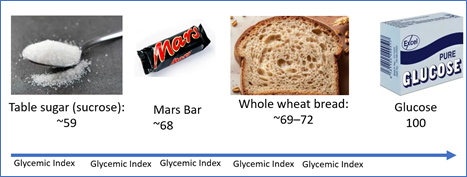
Since we are not living in times of famine, excess blood sugar and weight gain are real concerns. William Davis, author of Wheat Belly, often advises his patients to reduce or eliminate wheat and other grains to support weight loss and improve markers such as blood pressure and blood glucose. He argues that for meals on a typical day – bagel for breakfast, a sandwich at lunch, and a roll at dinner—can keep blood sugar elevated for much of the day.
Persistently elevated blood sugar can contribute to higher A1C blood levels and a process known as glycation, in which sugars bind to proteins in the body. Over time, this process has been linked to changes in tissues such as the eyes, blood vessels, skin, and kidneys. Given this, it’s worth asking: is wheat still deserving of its reputation as a “healthy whole grain”?
Gliadin Proteins – They are Addictive
What does addiction have to do with wheat? In the gut, wheat is broken down into opiate-like peptides (short pieces of proteins). These peptides bind to the brain’s morphine receptor, the very same receptor to which opiate drugs bind. It is estimated that 30% of population is addicted to that morning bagel! They experience something that can only be called withdrawal when they stop eating wheat.
As a discerning person, you might wonder if wheat is still deserving of its reputation as a “healthy whole grain”?

Gliadin proteins- Dementia and Ataxia
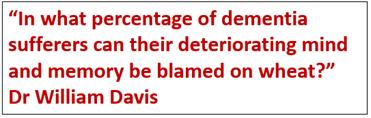
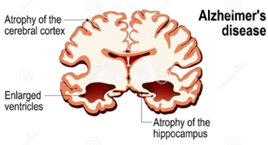
Those peptides I talked about above? They have been linked to numbness and tingling of the hands and feet (peripheral neuropathy). It has been discovered that wheat can damage parts of the brain (cerebellum and cerebrum as well as other structures) causing everything from incoordination (tripping, stumbling, trouble moving around) to incontinence and dementia. And you just thought your grandmother was aging too quickly! Could wheat have something to do with it?
Should this grain still be considered healthy?
We’re not done yet! Celiac Disease and Gluten Intolerance
About 1% of the population is unable to tolerate wheat gluten, even in small quantities. The lining of their small intestine breaks down from exposure. The increase in celiac disease has been paralleled by an increase in type 1 diabetes, allergies, and autoimmune diseases such as multiple sclerosis and Crohn’s disease.
Modern wheat has more gluten (gliadin protein) than wheat grown 100 years ago. Gliadin releases zonulin which makes the intestines more permeable. Unwanted proteins enter the blood stream, and autoimmune disease follows. I was diagnosed with celiac disease about 26 years ago. My doctor did not even use the word “celiac” back then. He said something about “gluten” and I had to figure out the rest myself. Wheat is not a “healthy, whole grain” for me.
Phytates and Oxalates Bind Minerals
You may be asking, “You mean there’s more bad news about wheat?”.
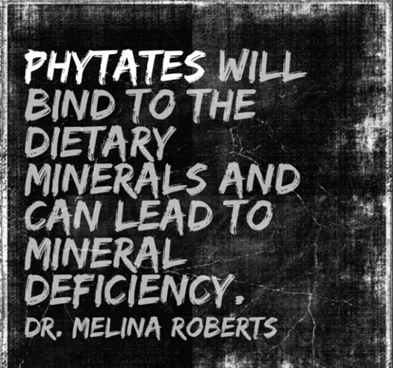
Yes, there’s more. Wheat (and grains in general) have what are called phytates and oxalates. These are biological chemicals that help the plant grow and resist pests. But they also grab and hold on to all those wonderful minerals that we humans need in our diets—such as calcium, magnesium, iron, zinc etc. You may think you are getting your daily supply of minerals in that morning whole grain bagel, but no, the bagel is carrying the minerals all the way through your digestive system from one end to the other—with the added benefit of leaving you with kidney stones! Sorry!
- Just 2 oz of wheat flour blocks zinc absorption.
- Zinc deficiency shows up as hair loss, rashes, diarrhea.
- Zinc is primarily in animal foods
- Vegans and vegetarians that eat grains are at risk of zinc deficiency.
Is wheat still a healthy whole grain?
Bone Density and pH disrupter
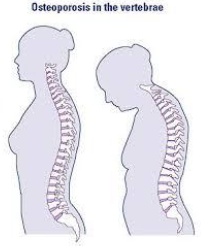
Shall we continue? Wheat causes inflammatory bone conditions and aggravates osteoarthritis. Eating a lot of “healthy whole grains” is what is called an acid-forming diet. Acidic urine causes calcium to be pulled from bones (especially if you lack fruits and veggies). If you pull enough calcium from your bones, you may weaken them and risk getting osteoporosis.

Is wheat still a “healthy whole grain”?
And, last but not least- Wheat is Sprayed With the Herbicide Round Up
Yes, wheat can be sprayed with glyphosate to dry it out before harvest. Wheat is not genetically modified, but it can be sprayed with a herbicide to help it dry before harvest. If you eat wheat products, you may be consuming herbicides, (unless of course you opt for organic wheat). Organic products are the only way to avoid glyphosate and herbicides.
Is it a “healthy whole grain” when it is tainted with herbicides?
Some of you may argue- “what about the nutrients in wheat?”
Doesn’t wheat have nutritional value that makes it “the staff of life”? Yes and no. Let’s step back for a moment and look at wheat from a nutritional standpoint.
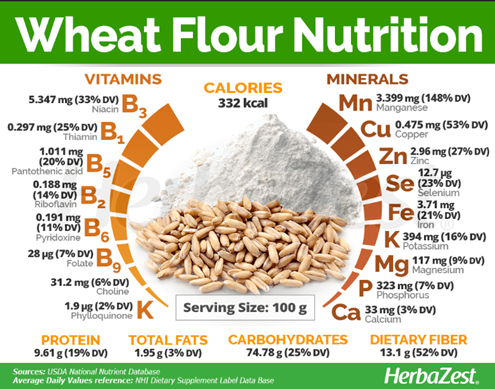
According to the above diagram, yes, there are a lot of nutrients in wheat (and in grains in general). If you stop eating them, you will miss out on all the B-vitamins, and minerals, and fiber. That can’t be good. But B vitamins can be found elsewhere—especially in beans, legumes, pork, dairy, and mushrooms.
Fiber? That is easily found in fruits, vegetables, nuts—just be aware that high oxalate levels can make other plant foods difficult to digest as well.
And, the minerals in wheat were never available to your body anyway—due to the oxalate levels. Animal foods (such as red meat, poultry, fish) are a better source of minerals because the minerals are more bio-available.
You May Also Ask- “What about Sourdough Bread”?
Sourdough bread would be an improvement over “Wonder Bread” but it will not reduce the gluten or the wheat germ agglutinin, nor will it lower the oxalates appreciably. And it may still trigger a rise in blood sugar. However, making your own sourdough bread with organic wheat flour (so you can control the ingredients) would be an improvement over anything store-bought. I have friends that report less digestive discomfort when eating wheat bread in Europe which may to due to the difference in hybridization as well as the ban on herbicides in European countries. The European Union restricts pre-harvest use of glyphosate.
Full Disclosure!
No, I do not eat wheat. And I try to avoid other gluten free grains such as sorghum, teff, corn, millet. But, I do consume some rice. I eat white rice as it is lower in oxalates. I also purchase rice from India as it has lower amounts of arsenic. I cook up a batch once a week and consume about half a cup a day. It has a large amount of “resistant starch” which is good for the gut.
The Food Pyramid
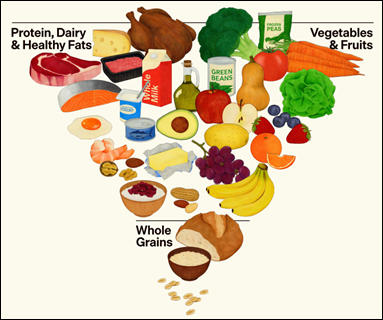
Now that we have new leadership in Health and Human Services, and in the United States Dept of Agriculture, we have a new set of dietary guidelines. The old guidelines were heavy on grains as shown below (love this picture!)

The new guidelines are inverted and put “healthy whole grains” at the bottom. You decide how you want to manage these changes!
Conclusion
I have thrown a lot of information at you in this article. Here is a quick summary of the ugly side of wheat and the only way to mitigate it-
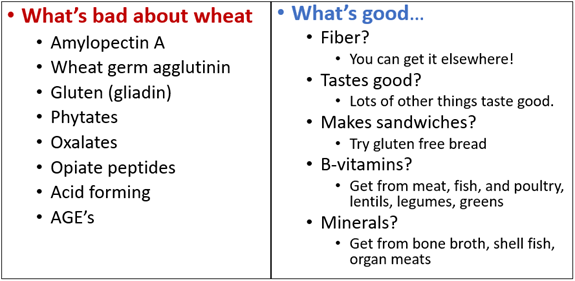
As you can see, eating more “healthy whole grains” may be a hugely destructive process for your health. Are you rethinking the mantra “healthy whole grains”? I hope so. Humans have a dietary script written into our genetic human code. It does not include the ability to digest grasses (grains). Mother nature left that to the grazing animals.
I found a great 20-minute video that you can view if you are not yet convinced.

Always talk to your health professional before starting anything new. This information is not intended to diagnose, treat or cure any condition and is intended only for entertainment. I welcome your comments
Great summary of Dr. Davis’s book. It’s still SO hard for people to give up wheat even when you tell them all of this!