Can you guess? If you are a veterinarian or a cat owner, you might know the answer. Both cats and babies may have an adverse reaction to acetaminophen (Tylenol). If you own a cat, your veterinarian has probably already told you never to give acetaminophen to your kitty. If you have a baby at home, it is unlikely that your pediatrician ever told you this.

If this is something new to you (it was for me) then read on. Why is this important? Well, you don’t want to hurt your cat, and you don’t want to harm an infant.
Acetaminophen has been around for a long time—it was first synthesized in a lab in 1878. A few years later in 1884 it was accidentally discovered to lower fever, even though they were testing it to get rid of a patient’s worms. (The worms didn’t budge, but the fever went down).
In 1893, acetaminophen started to be produced by Bayer and was handed to a pharmacologist to evaluate it as a potential drug. The drug was tested, and yes, it reduced fevers, but it was also found to produce liver damage at high levels in adults. But that was as far as the testing went.
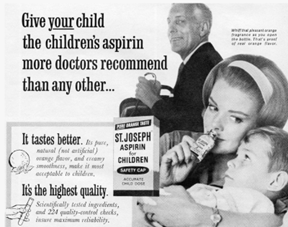
Then, decades later, the FDA approved acetaminophen (Tylenol) for children—the year was 1955. But even though Tylenol was approved, parents continued to give aspirin to children with fevers as that was the norm and extremely common from the 1950s through the 1970s. (If you are old enough you might remember St Joseph chewable aspirin or Bayer aspirin!)
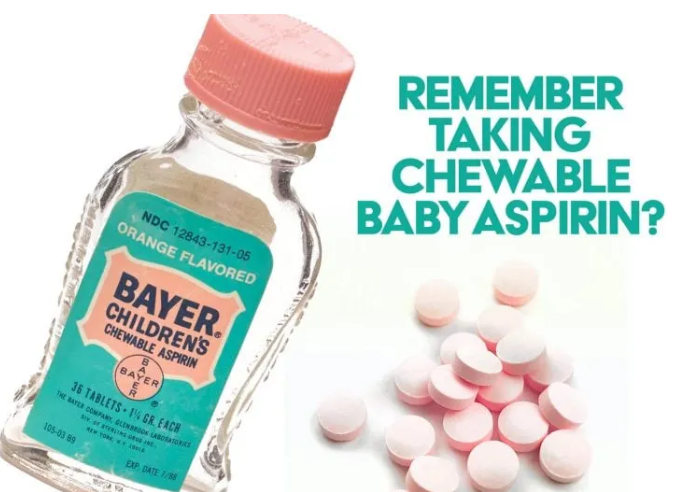
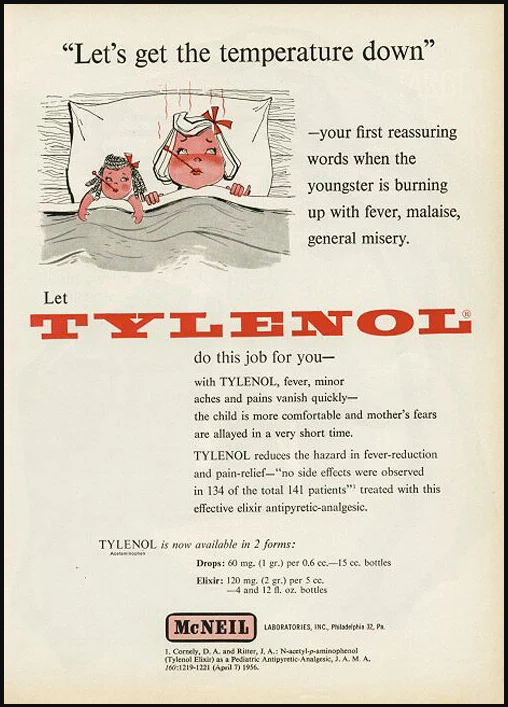
However, when Reye’s syndrome became a problem (associated with the use of salicylates such as aspirin during certain viral illnesses), the sales/use of children’s aspirin dropped sharply, particularly from about 1980 to 1985. This was the time that children’s acetaminophen use increased, helped along by direct-to-consumer advertising of Tylenol which reached $115 to $250 million per year, encouraging parents to give Tylenol to their little “hot heads”.
However, acetaminophen—Tylenol—usually thought of as very safe, may actually have had a negative impact on children’s health, and this is only now being uncovered. According to the excellent work by William Parker, PhD (Tylenol and Autism), neurological brain damage began to increase in young children in the early 1980s, shortly after Tylenol use increased. This brain damage was observed in infants all the way up to children age 6. In the figure below (from the above referenced book), there is a steep increase beginning at about that time. If you look carefully at the figure, the left axis on the graph says “Autism” but another way Parker describes it is “neurological brain damage”.
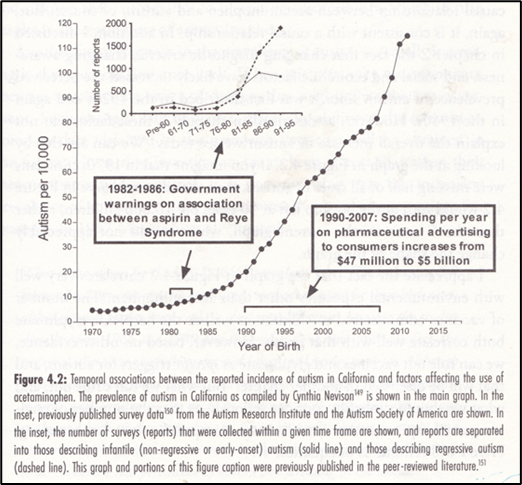
Neurological Brain Damage
It is now known that acetaminophen can be converted to a toxic substance in the body, particularly when the body is under stress. Infants and small children may have difficulty clearing this toxic compound and may therefore be especially vulnerable to its effects.
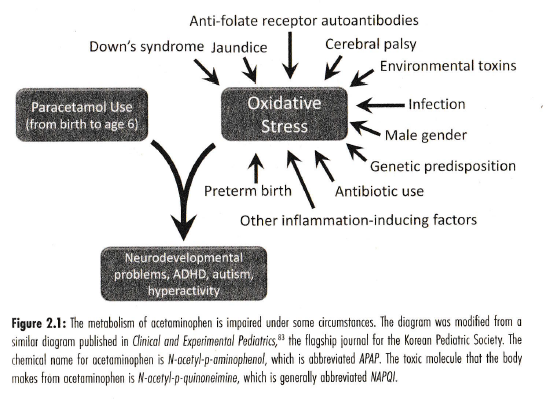
The key appears to be stress (also known as oxidative stress). This can include fever, infection, jaundice, antibiotics, exposure to environmental toxins, and other stressors. In other words, if a baby becomes sick, develops a fever, and is given acetaminophen around the clock, the toxic compound may build up faster than the baby can clear it, eventually exhausting the baby’s ability to detox it. This can cause brain damage. The figure below ((Tylenol and Autism) shows this pictorially. (Note: the word “paracetamol” is another word for acetaminophen)
Glutathione- a Master Antioxidant
At the risk of boring you with the biochemistry, it is the biochemistry that convinced me that this is a real problem. It turns out that scientists knew as early as the 1970s that acetaminophen could be converted to a toxic substance by the human body under certain circumstances. And By 2008 scientists knew the following:
Newborns were deficient in a metabolic pathway necessary to process acetaminophen safely (ref). Veterinarians also knew that domestic cats could not tolerate acetaminophen because they were deficient in the same pathway (ref and ref).
So, what are the circumstances that can make acetaminophen toxic? When the body is under oxidative stress—from an infection, fever, inflammation, exposure to environmental toxins, or other stressors—and is then given acetaminophen, some of the drug is converted to a toxic substance called N-acetyl-p-benzoquinone imine (NAPQI).
Here is where glutathione comes in. If the body has enough glutathione, it can neutralize this toxic substance, and all is well. But if the body doesn’t have enough glutathione, NAPQI can accumulate and eventually damage brain cells. Babies often do not have enough glutathione.
By the 1990s, it was also known that many children with autism had reduced levels of glutathione. They also had reduced sulfation capacity, which is another pathway the body uses to process and eliminate wastes.
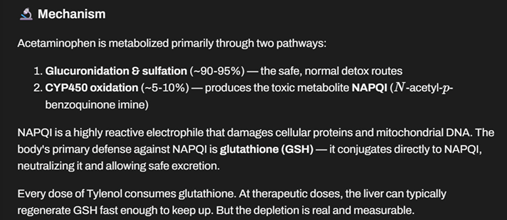
There is plenty of research to back this up. A large 2020 analysis in Translational Psychiatry combined the results of 87 studies involving thousands of children with and without autism. (about 4,900 ASD vs 4,200 controls). The researchers consistently found that children with autism had less available glutathione and more oxidative stress. In other words, the very antioxidant the body needs to help neutralize the toxic byproduct of acetaminophen was already in short supply. Every dose of Tylenol consumes glutathione.
William Parker also describes cases in Tylenol and Autism in which parents gave their newborns the maximum recommended doses of Tylenol for several days in a row. The parents were following dosing instructions, yet their children subsequently experienced neurodevelopmental problems. Correlation is not always causation, but you need correlation before you can pin down causation. The fact that acetaminophen is converted into a toxic substance by the body under certain circumstances is damning. And has been known for some time (ref).
And the Sad Part
My daughter was diagnosed with Pervasive Developmental Delays from birth. She missed all the normal milestones that an infant/child normally hits during the first several months to a year of life. At 3 years old she was finally diagnosed as “autistic”.
I initially thought that her autism was triggered by a vaccine. (Isn’t that what parents point to today?) However, there were no vaccines given at her birth (that I know of). So, what triggered her autism?
At birth, she had a fever. Nobody in the hospital knew why she had a fever. I can only wonder whether she was given acetaminophen around the clock during those first days in the hospital. This was 1991 when Tylenol was already widely used. I can’t imagine the hospital not using it.
Could this have been what caused my daughter’s neurodevelopmental injury? Was it the combination of oxidative stress from the fever and acetaminophen given during those first vulnerable days? Based on the research I have presented here, I now believe that is a very real possibility. I may never know for certain what happened to my daughter. But after all these years, I feel as though I finally have a possible explanation.
Need More Evidence?
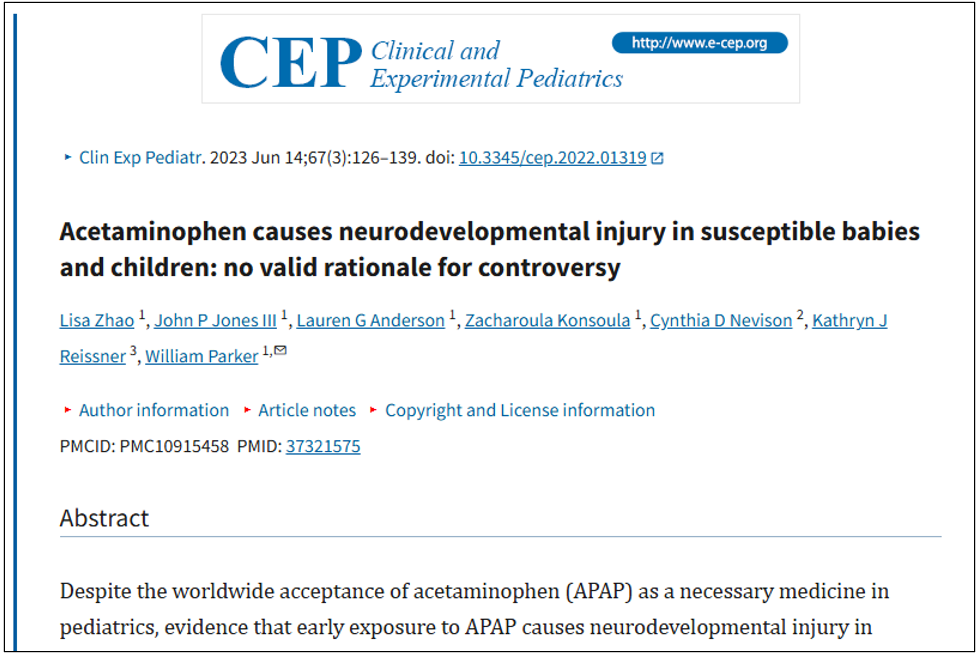
Now, you may be doubtful that a common, well-liked, over-the-counter pain reliever like Tylenol could be causing brain damage. But there is compelling evidence that this is the case. What I have presented here is only a small part of the evidence. In Tylenol and Autism, William Parker and his colleagues lay out 36 separate lines of evidence that they believe, when considered together, support their conclusion that acetaminophen—even at recommended doses—can trigger autism in susceptible babies and young children. I obviously can’t cover all 36 in a blog post, but here are a few of the studies that caught my attention.
The role of oxidative stress, inflammation and acetaminophen exposure from birth to early childhood in the induction of autism. This article proposes that one possible explanation for the increased prevalence of autism is that increased exposure to acetaminophen, exacerbated by inflammation and oxidative stress, is neurotoxic in babies and small children. The authors call for urgent investigation into whether acetaminophen exposure shortly after birth could contribute to autism.
Evaluating the Role of Susceptibility Inducing Cofactors and of Acetaminophen in the Etiology of Autism Spectrum Disorder. This paper examines the possibility that acetaminophen exposure, together with certain biological and environmental risk factors, may contribute to the development of autism in susceptible children.
Long-term Adverse Effects of Paracetamol – a Review. This review examines possible long-term adverse effects of acetaminophen, including concerns about exposure during pregnancy.
Ritual circumcision and risk of autism spectrum disorder in 0- to 9-year-old boys: national cohort study in Denmark. This Danish study found an association between ritual circumcision and a higher rate of autism diagnoses.
An Interview with Dr. William Parker on the Connection between Acetaminophen and Autism. “Orthodox Jews apparently have much less autism compared to Reform Jews. Reform Jews use acetaminophen because they’re taking a more modern approach, whereas the orthodox are traditional and do not use it. We see a big difference in autism rates among those groups that correlates with acetaminophen exposure…”
And that brings me to something I wish I had understood in 1991
If I knew then what I know now, then I would not have agreed to this medicine given to my daughter after birth. Which leads me to this dilemma—when a baby develops a fever, should we automatically reach for a medicine to lower it? Or should we recognize that fever is part of the body’s natural defense against infection?
I have learned over the years that fever has a purpose. It is one of the ways the immune system responds to infection. A mild fever does not always need to be suppressed simply because the temperature is elevated. Of course, a fever can signal a serious illness. The important point is to ascertain what is causing the fever in the first place.
Why Aren’t Physicians Telling Parents About Acetaminophen?
Unfortunately, Acetaminophen was never subjected to the kind of scrutiny that a modern compound would face before pediatric use. It was grandfathered in on the strength of a relative-safety comparison (based on adult testing), not on absolute safety data based on pediatric testing.
Dr William Parker asks the question, “Why isn’t this information getting out to physicians”? I ask “Where is the informed consent? Why do some children end up disabled for life?” Why aren’t parents being told about this research suggesting that acetaminophen may carry risks?
Parker and his colleagues go considerably further. After examining the 36 lines of evidence discussed in his book, Parker estimates that acetaminophen exposure could be involved in up to 90% of autism cases, particularly when susceptible babies and young children are exposed to conditions of oxidative stress. That is an extraordinary conclusion—and one that deserves serious investigation.
I hear very little discussion about this research. Even President Trump held a press conference on Sept 22, 2025 (Remarks on Children’s Health) stating that Tylenol should not be given to babies. Secretary of Health and Human Services Robert F. Kennedy, Jr was part of this press release. That was over a year ago! Crickets since then.
I write this article to make you (my readers) aware of the potential risks of giving your children, or grandchildren, acetaminophen or Tylenol. I encourage you to read the research and Parker’s book for yourself. Discuss it with your pediatrician (who may be very unaware of this). Please consider this information and pass it on to others. I cannot give medical advice, but I can make you aware of this research.