It sounds crazy, but maybe cold and flu season is prime time for our bodies to change gears, switch to a slow speed, and reset. After all, animals slow down, and some even hibernate as winter approaches. (Note: This article is based on an article by Sayer Ji called What If Flu Season Is the Body’s Emergency Reset?)
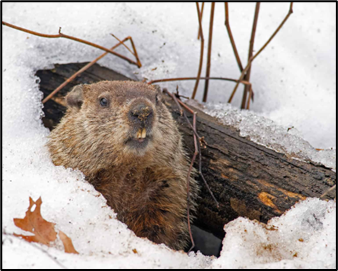
I’m not suggesting that we hibernate, but as the seasons change, our bodies are supposed to deal with the changes. These changes can be things such as decreasing sunlight, cooling temperatures, as well as fluctuations in humidity. Our ancestors essentially lived outdoors and experienced these changes firsthand. They experienced the rays of the sun from sunrise to sunset, including UV rays and infrared rays. They dealt with hot, dry summer weather and then oncoming cold, wet weather. They went through different levels of humidity, often with very little adequate shelter.
These bodily stressors—called eustress—are things that made us stronger. They imparted a kind of toughness to our ancestors, and they benefited from them.
When our bodies are under environmental stress (heat, cold, exercise, and fasting, for example), we endure the stress and then build a physiological response to it. After the stress is removed, we recover and are stronger. Eustress makes us stronger in anticipation of future challenges.
In today’s modern world, however, we don’t experience these kinds of environmental stresses. We run from our house to our car to our workplace, all the while enjoying an even temperature of 72 degrees. We duck inside to get out of the rain. We adjust our air conditioner to maintain 50% humidity. We stay out of the sun by covering up with hats and clothes. We are insulated from Mother Nature’s challenging environment.
So, when winter arrives…
When winter arrives, we are not ready. Could it be that we have not maintained our resilience? Could it be we have deprived ourselves of environmental stressors? Cold days come and we are susceptible to becoming sick. We have been too insulated. We are missing the “ancestral inputs”. Sayer Ji lists those inputs as these:
- UVB scarcity (not enough sunlight)
- disrupted light/dark timing (staying up too late looking at blue screens)
- dry air/low absolute humidity (this drives virus transmission)
- the loss of hot/cold cycling that historically trained human physiology.
“If the body expects rhythmic thermic “training signals” and does not receive them, it may eventually deliver them to itself—sometimes violently—through involuntary fever programs [illness] and inflammatory resets.”
Sayer Ji seems to be saying that we can fall ill even without a contagion or “bug” to infect us.
And when we do get sick, we are constantly trying to stop the symptoms of being sick. We lower the fever with analgesics. We stop the runny nose with antihistamines and decongestants. We stop the cough with an antitussive. We gulp down some medicine and continue to go to work, running around the community, trying to function normally, all the while the media amplifies fear—It’s flu season! The flu is coming! Get your flu shot!

And hence, the pharmacy shelves are packed with every kind of cough, cold, fever, headache, and congestion drug imaginable. All of it is aimed at one invisible “flu bug” that is going to invade your body and make you ill (or so they say).
What if these symptoms are the way our bodies are dealing with the seasonal changes? What if fever is the body’s defense against infection (and the lack of eustress)? What if the runny nose and sneezing are helping to expel irritants and pathogens? Symptom-relieving medications can be useful, but some symptoms, especially high or persistent fever or breathing difficulties, require medical attention. But that is not what I am talking about here. I am talking about run-of-the-mill colds and flu.
Terrain Theory
I wonder if fall and winter seasons may be less about germs and flu bugs and more about a bodily reset. Could eustress and the condition of our internal ‘terrain’ play a role in how well we adapt to seasonal changes? What is our “terrain”?
Terrain theory is the view that disease — including infectious disease — arises primarily from the internal condition of the person (the “terrain”) rather than from the invading microbe alone. It holds that a healthy, well-nourished terrain (body) resists or neutralizes pathogens, while a compromised terrain (body) invites disease in.
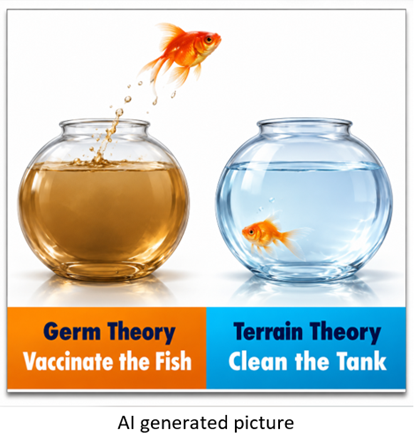
Our terrain is the state of health of our body. It is our circadian rhythm matched to the season. It is purposeful exposure to sunlight, in particular UV light and infrared rays, such as light in the morning and again in the evening, which helps regulate our circadian rhythm.
What are the environmental stressors that help us become stronger?
Purposeful exposure to hot summer days builds stamina in the heat, and then similar exposure to the cold in winter builds stamina to the cold. Other examples might be sleeping in a cool bedroom at night. Or taking a hot/cold shower. Or going to bed at dusk and waking at daybreak. The idea is to bring back the environmental stresses we are missing. Here are some of Sayer Ji’s suggestions:
- Get outside: Enjoy morning sunlight and maintain a regular sleep schedule.
- Experience heat and cold: Try a sauna, hot bath, or alternating warm and cool showers.
- Exercise and recover: Challenge your body with vigorous exercise, but allow time for rest and recovery.
- Feed your gut microbiome: Eat a variety of healthy foods, including fiber and fermented foods, while avoiding highly processed foods.
- Prepare for winter: Maintain comfortable indoor humidity, bring in fresh air, spend time outdoors, and reduce stress.
“Perhaps winter illnesses are influenced not only by the viruses we encounter, but also by how well our bodies have adapted to seasonal changes.” Sayer Ji.
Did You Know That Your Body Can Produce Flu-Like Symptoms Without the Flu?
Did you know that flu-like symptoms can be generated by our bodies? Folks who endure extreme physical exercise often experience flu-like symptoms during their recovery—sweating, nausea, chills, headache, and malaise. These eventually pass, and the body recovers.
If flu-like symptoms can be produced “on demand,” then what does that tell us about “getting the flu” during flu season? It appears that Influenza-like illness can be described as a collection of symptoms—fever, chills, fatigue, muscle aches, and sometimes respiratory symptoms—that can have several causes.
One cause for Influenza is an infection caused by an influenza virus. We are all familiar with this.
But another cause for influenza may be when our body misses the ancestral environmental inputs. Sayer Ji argues that when the body no longer experiences regular temperature changes, appropriate sunlight exposure, and other environmental signals, it may initiate illness as a form of a physiological recalibration.
How many times have you said…” I’m sick, I must have caught a bug” but you don’t know anyone around you that was sick (to give you that bug)? Maybe your body was telling you to slow down, rest, gain your strength back.
Modern-Day Researchers Are Questioning Germ Theory
“Germ Theory” was brought about by scientists such as Louis Pasteur in the mid-19th century that told us that disease is a foreign invasion by invisible particles (viruses and bacteria). The germs replicate inside of us, make us ill, then we recover. Louis Pasteur (and many others after him) were unable to supply evidence to validate this theory. Germ theory is an incomplete model — it ignores terrain (the health of the body).
Modern-day researchers are starting to think of contagion in a different way. They believe some diseases are caused by poisoning (toxins), malnutrition (nutrient deficiencies), injuries, or radiation (EMF). In a fascinating way, we can look at plagues over the past 700 years and see these in a different light:
Scurvy — a lack of vitamin C. Sailors dropped dead of a disease we now know was purely nutritional, cured not by medicine but by a vitamin.
Cholera (London) — eliminated only after sewer systems were installed. Sanitation, not vaccination or drugs, ended the outbreak.
Tetanus — a poorly cleaned wound. Simple hygiene and good terrain did more than any “germ” doctrine.
Tuberculosis, aka “siderosis” — poor diet, lack of vitamins, or exposure to iron oxide. The occupational iron-dust story was real, and it was often labeled TB, despite the presence of a bacterium.
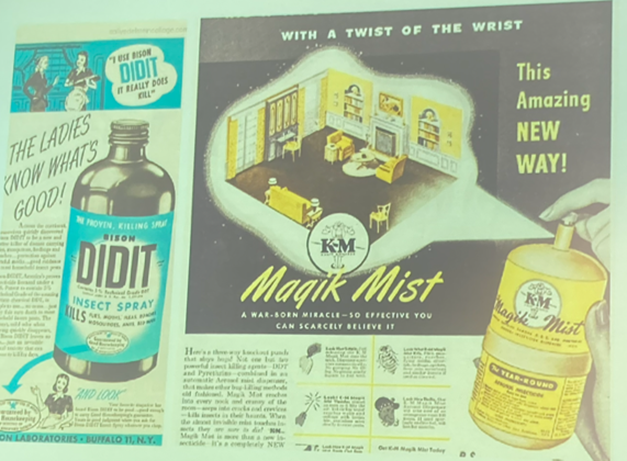
Polio — Congressional testimony points to neurotoxic pesticides like lead, arsenic, and DDT as the culprit. The virus was never cleanly isolated. Children across the mid-1900s were literally sprayed with these pesticides — and polio mostly went away when DDT spraying stopped.
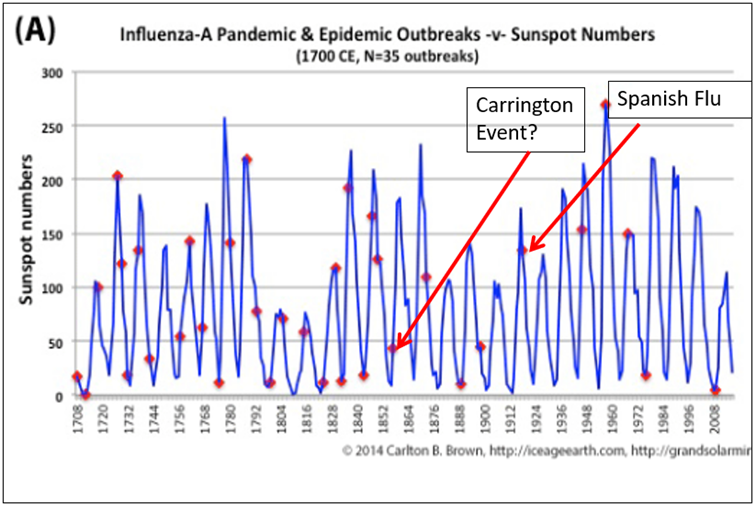
Spanish Flu — extreme solar activity was concurrent and has since been associated with flu outbreaks. Pandemics have clustered around sunspot maxima for centuries — 1918, 1957, 1968, 2009 all landed within a year of a solar peak.
Black Death And consider the Black Death of the 1300s. The conventional view is flea bites from infected rats — but the Black Death killed with shocking speed, and no documents of the era describe vast legions of rats. Chroniclers instead speak of a great comet and rains of fire, of something that came from the sky. Comets carry a high electromagnetic charge and can influence solar activity — and we’ve seen that solar activity tracks flu outbreaks.
The lesson of history is not that invisible particles randomly wander the globe causing disease. The lesson is that when the terrain (body) is poisoned, malnourished, or disrupted, disease follows — and when we clean up the terrain, the plagues retreat.
Which Brings us to Influenza Pandemics.
There is a fascinating correlation of influenza pandemics to solar flares as alluded to above (the Spanish Flu).
Influenza pandemics tend to cluster near solar maxima — the peaks of the ~11-year sunspot cycle (see chart below). Several researchers have pointed out that most of the major flu pandemics of the last three centuries align suspiciously well with periods of high sunspot numbers and associated solar storms.
Is it possible that influenza pandemics may be influenced by the sun?
How might the sun affect influenza? Researchers have proposed three main ideas:
- UV / cosmic ray modulation: During solar maxima, the stronger solar wind deflects more galactic cosmic rays. Some argue the reduction in cosmic ray flux … alters atmospheric chemistry or the host immune environment.
- Ionizing radiation & mutation: Solar flares and coronal mass ejections can spike radiation levels and potentially increase viral mutation rates or reactivate latent viruses.
- Magnetic field disruption: Geomagnetic disturbances may affect immune function, vitamin D synthesis pathways (via UV), or even viral infectivity.
“Since the year 1700 a statistically significant 76% of influenza pandemics and major regional epidemics occurred within a year of the peak or trough of the 11-year sunspot number cycle, including all 20th and 21st-century pandemics and the first avian H5N1 (1997) and H7N9 (2013) zoonoses [diseases that can pass between animals and humans]”.This fascinating statement was made by Carlton B. Brown (Environmentally Induced Pandemic Influenza Risk Factors).
Another researcher, R. Edgar Hope-Simpson, writing in Nature (1978) showed that—the major influenza A subtypes— H1N1 (1947), H2N2 (1957), H3N2 (1968) — each coincided with sunspot maxima. He traced the synchrony back to at least 1917, noting the 1917 maximum anticipated the 1918–19 pandemic (Spanish Flu). He’s also the same researcher who famously argued influenza’s spread is tied as much to solar and seasonal phenomena as to person-to-person transmission
So, if the flu and infection are not all contagious bugs and germs but might actually be the human body’s response to changes in the environment, that means we may have less to fear from flu season and more to gain by keeping ourselves healthy with a good circadian rhythm.
I’ll end with one more quote:
“And the highest form of prevention is not panic. It is restoration of more ancient ways of self-care and resilience”—Sayer Ji.
Always talk to your health professional before starting anything new. This information is not intended to diagnose, treat or cure any condition and is intended only for entertainment. I welcome your comments.
Excellent!!!! I hear Germ Theory is only a theory and has not been proven by the scientific method.
Several doctors have studied hundreds of thousands of research papers to find even one that proves a virus was actually separated out from other cell material and there is no such study. No one has actually isolated a pure virus. A “virus” may be nothing more that an exosome that our bodies use as a vehicle to eliminate waste from the body.